
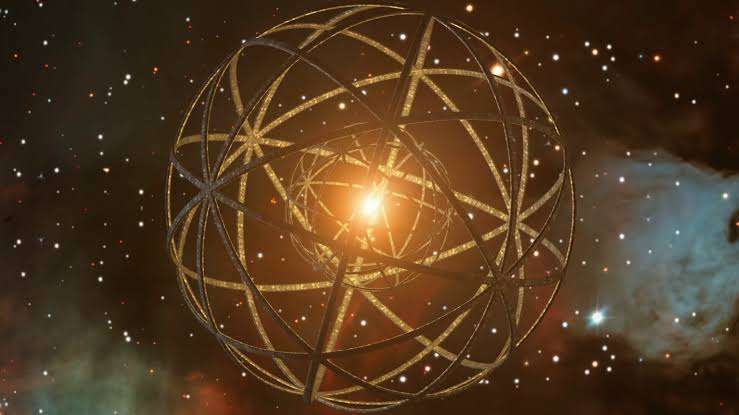
For decades, the concept of a Dyson sphere has captured the imagination of scientists, engineers, and science fiction writers alike. Originally proposed by physicist Freeman Dyson in 1960, this megastructure would capture nearly all of a star’s energy output. While the idea has long seemed like a distant dream, recent speculative research links Dyson spheres to something even more profound: the possibility of human consciousness living forever.
The Power of a Star in Human Hands
A Dyson sphere or more realistically, a Dyson swarm of orbiting solar collectors could harness the unimaginable energy radiating from a star. Compared to today’s power generation, this would provide virtually limitless energy, opening doors to technological feats we can barely imagine.
One of those feats, according to futurists Alexey Turchin and Maxim Chernyakov, is digital resurrection. Their so-called Immortality Roadmap envisions a future where humanity uses Dyson-level power to fuel hyper-advanced artificial intelligence capable of recreating human consciousness.
Consciousness Beyond Biology
In this vision, Dyson-powered AI would reconstruct individuals from exhaustive personal and historical data. Memories, personality traits, and decision-making patterns could be simulated in high-fidelity digital avatars. These reconstructed minds could then exist in virtual environments, effectively creating digital afterlives.
This idea echoes the futuristic worlds portrayed in science fiction, such as the San Junipero episode of Black Mirror, where human minds are uploaded into eternal digital realities. In theory, with enough computing power, entire civilizations could flourish in simulations, independent of physical biology.
Engineering the Impossible
Of course, reality checks are in order. Building a Dyson sphere is beyond the reach of our current technology. The structural materials required to orbit a star without collapsing simply do not exist yet. Stability is another challenge, swarms of collectors would face risks of collision, orbital decay, and gravitational instability.
Some recent studies suggest that Dyson-like megastructures could theoretically survive in special binary star systems, but even then, the engineering hurdles are monumental.
Searching for Alien Megastructures
Interestingly, astronomers are already on the lookout for Dyson spheres, not built by us, but by other civilizations. Large surveys such as Gaia and WISE have searched for unusual infrared signatures that might indicate starlight being absorbed by massive artificial structures. A handful of candidate stars have been flagged, though natural explanations remain more likely.
If Dyson spheres do exist elsewhere in the galaxy, they could serve as technosignatures of advanced alien civilizations operating on a scale far beyond our own.
The Matrioshka Brain Concept
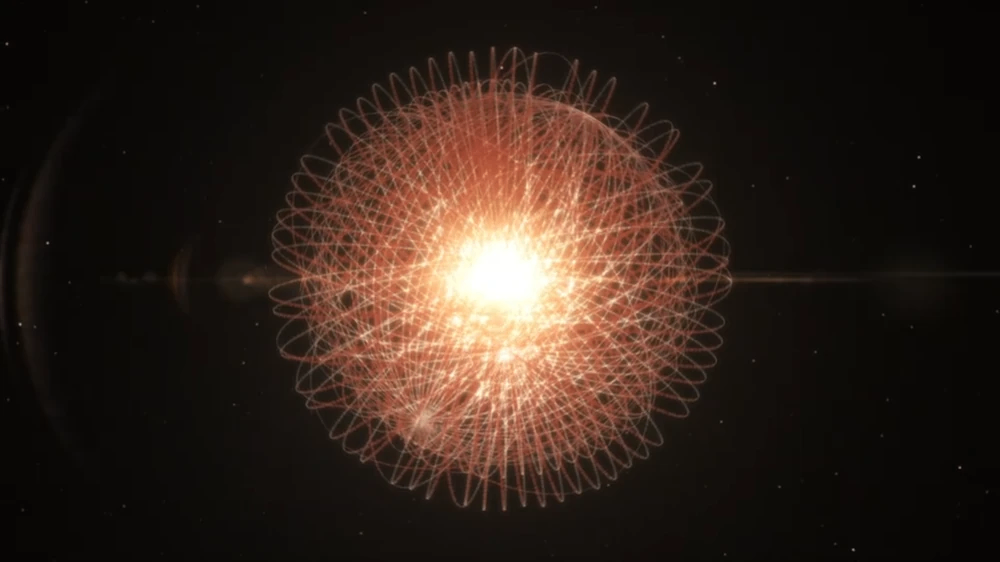
Taking things a step further, theorists propose the Matrioshka brain i.e. a layered system of Dyson spheres designed specifically for computation. Each layer would harvest energy and process information, allowing for mind-boggling computational capacity. Such a construct could host billions of uploaded human minds, living indefinitely in simulated utopias.
A Future Worth Dreaming About?
The vision of Dyson spheres enabling digital immortality lies at the intersection of astrophysics, engineering, and philosophy. While still wildly speculative, it forces us to ask:
- Should humanity pursue immortality through technology?
- Could consciousness really exist outside biology?
- And what responsibilities come with harnessing a star’s energy?
For now, Dyson spheres remain firmly in the realm of theory. But as our capabilities in space exploration, artificial intelligence, and materials science evolve, what once sounded like science fiction may edge closer to science fact.
In the pursuit of eternal life, the stars themselves might hold the key.
Discussion
Start the conversation
No comments yet
Be the first to share your thoughts on this article. Your insights could spark an interesting discussion!