
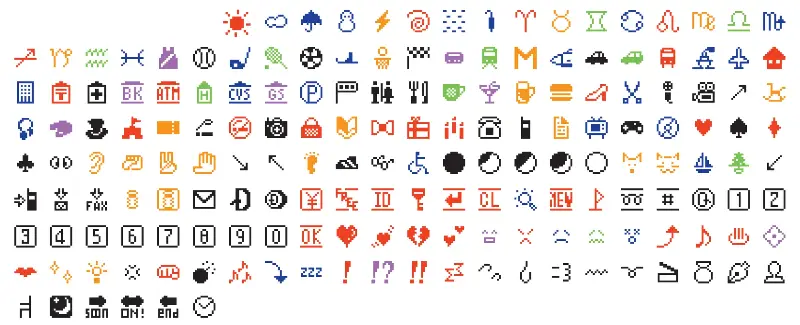
In the vast timeline of human communication, some leaps stand out as extraordinary. The invention of the alphabet, the printing press, and digital messaging each reshaped how we connect, learn, and share. But in the last 25 years, a new writing system was born from just 176 humble pixels that has taken the world by storm: the emoji.
Japan's Ingenious Shortcut
The journey began in 1999, with Japanese designer Shigetaka Kurita. Tasked by NTT DoCoMo to enhance their i-mode mobile internet service, Kurita devised 176 small icons, each etched onto a 12×12-pixel grid. Bypassing the limitations of text-based communication, where emotion and nuance were easily lost, Kurita’s pictograms infused messages with tone, context, and feeling, all within the constraints of early mobile technology.
Kurita wasn’t the first. In 1997, J-Phone (now SoftBank) had already experimented with emoji on their phones, but it was DoCoMo’s set that would become a cultural touchstone. These symbols were a response to Japanese users’ need for concise emotional expression, not a grand linguistic plan, but a local solution that would soon ripple across the globe.
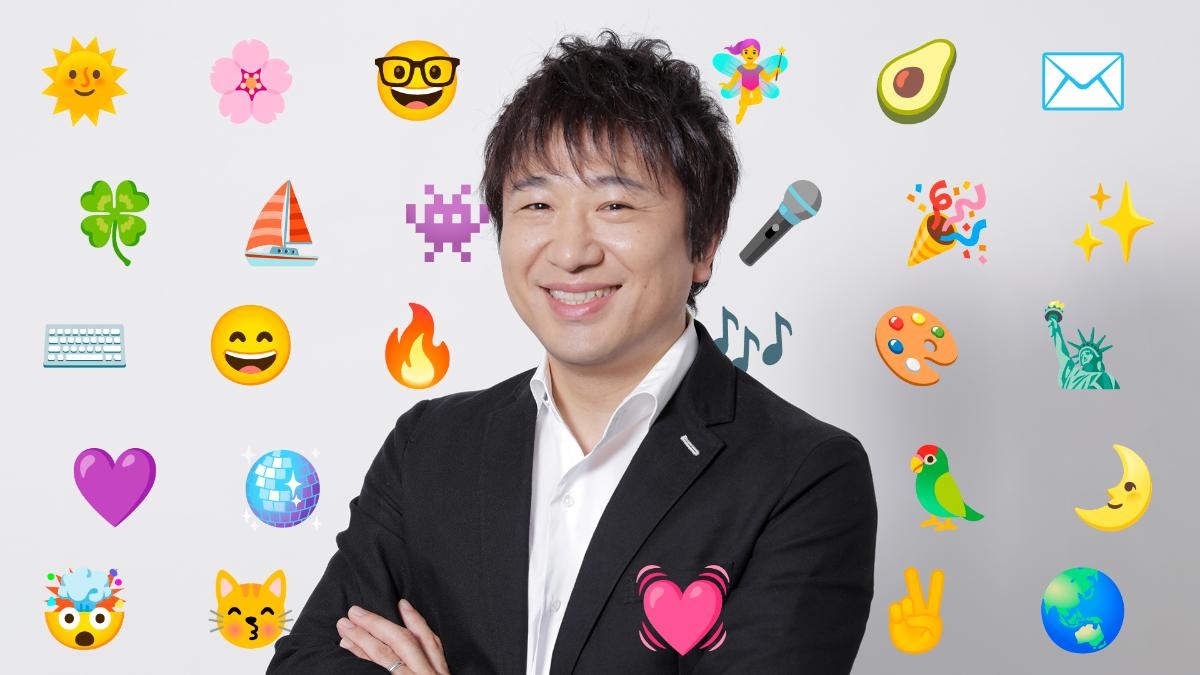
The Global Spread: Technology Meets Culture
The real magic happened when emoji transcended Japan. Their journey from a regional curiosity to a universal language gained momentum as tech giants integrated emoji keyboards into smartphones: Apple’s iOS (2011) and Android devices standardized emoji worldwide. The Unicode Consortium played a critical role, ensuring cross-platform compatibility so that an emoji sent from Tokyo could be understood in Toronto or Tunis.
Today, the scale of emoji use is staggering. Facebook reports that 5 billion emojis are sent daily on Messenger alone; analyses estimate more than 5 billion are used globally each day across platforms, underscoring just how embedded they are in our digital lives.
From Museum Pieces to Presidential Prose
The cultural recognition of emoji cannot be overstated. In 2016, the Museum of Modern Art (MoMA) in New York added Kurita’s original emoji set to its permanent collection, hailing them as “humble masterpieces.” Emoji have appeared in presidential speeches, marketing campaigns, and literature. Children worldwide learn to “read” emojis before mastering spelling, embodying a new kind of digital literacy.
The Fastest-Spreading Writing System?
Linguists and media outlets have dubbed emoji the fastest-spreading writing system in history. While this is more a cultural label than a precise linguistic measurement, the facts speak for themselves: never before has a new symbolic system reached billions in such a short span, nor become so integral to modern communication.
Key Milestones
- 1997: J-Phone launches handsets with an early emoji set.
- 1999: Kurita designs 176 emoji for DoCoMo i-mode.
- 2011: Apple introduces an emoji keyboard for iOS users worldwide.
- 2016: MoMA acquires Kurita’s original emoji, cementing artistic status.
- Present: Unicode Consortium stewards emoji’s global standardization and evolution.
Why Did Emoji Take Off?
Japan’s unique mobile culture, where brevity and emotional nuance were paramount seeded emoji’s explosive growth. Emojis solved a practical problem, but in doing so, they unlocked a new “visual language” that transcends linguistic barriers, fitting seamlessly into the rhythm of fast-paced digital conversation.
Conclusion: Humanity’s Newest Way to Connect
Japan didn’t just export cars and electronics to the world, it unknowingly launched humanity’s newest global language. What started as 176 blocky icons now bridges cultures, ages, and geographies, allowing billions to express joy, sorrow, sarcasm, and love in just a tap. Emojis stand as proof: the story of human communication is still writing itself, pixel by pixel, smile by smile.
Discussion
Start the conversation
No comments yet
Be the first to share your thoughts on this article. Your insights could spark an interesting discussion!