
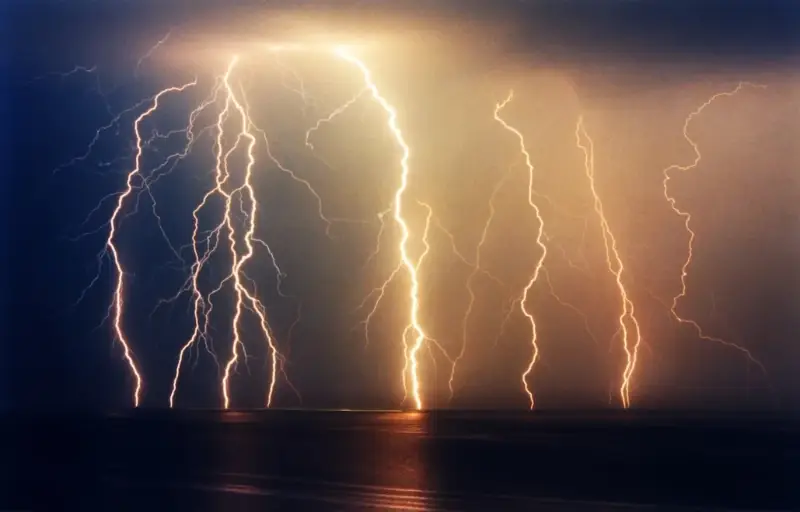
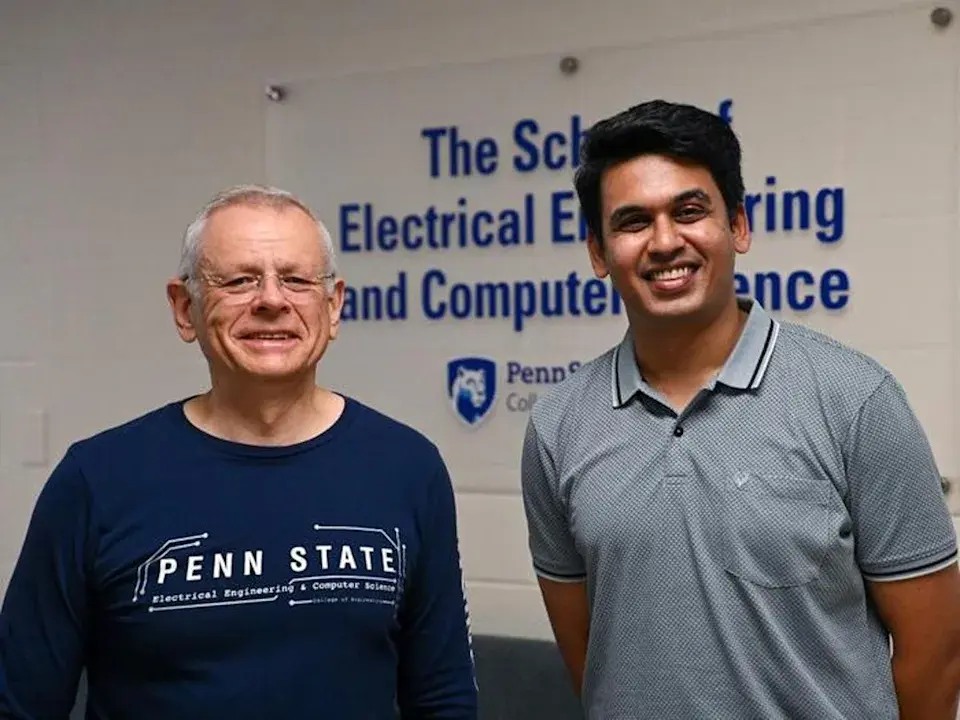
In a historic breakthrough, scientists have finally unraveled the mechanism behind one of nature’s most electrifying enigmas, how lightning begins inside thunderclouds. This long-standing mystery, which has persisted since Benjamin Franklin’s iconic kite experiment in 1752, has now been cracked by a team led by Professor Victor Pasko at Penn State University, marking a milestone in atmospheric science and solving a 273-year-old puzzle.
The Mystery: How Does Lightning Begin?
For centuries, scientists understood the general behavior of lightning as a dramatic electrical discharge between clouds and the Earth. But the initial spark, what actually triggers this cascade of electric energy remained unknown.
How does the electric field inside a cloud become strong enough to initiate a lightning bolt that spans kilometers? Despite extensive theories involving static buildup, colliding ice particles, and atmospheric conditions, the missing piece of the puzzle had eluded generations of physicists.
The Breakthrough: Cosmic Rays and Electron Avalanches
The Penn State research team combined satellite data, computer simulations, and high-altitude atmospheric measurements to reach a groundbreaking conclusion.
Their findings reveal a stunning chain reaction:
- Cosmic rays, high-energy particles from space, enter Earth’s atmosphere and strike air molecules.
- This collision creates free electrons inside thunderclouds.
- Within the cloud’s strong electric field, these electrons are rapidly accelerated to near-light speeds.
- The speeding electrons collide with nitrogen and oxygen, generating X-rays and additional energetic particles.
- This feedback loop forms a runaway avalanche of electrons and photons - a process so powerful it emits a short burst of gamma rays known as a terrestrial gamma-ray flash (TGF).
- The result: a fully formed lightning bolt, igniting from within the cloud and often striking the ground with immense force.
This phenomenon has been likened to a cosmic pinball machine, where particles ricochet, collide, and amplify in energy until the storm discharges violently.
Why Did It Take 273 Years?
Although Franklin’s experiments proved that lightning is electrical in nature, no one could explain how such a high-voltage process kicks off in the atmosphere, where air is a good insulator, and electric fields are usually not strong enough on their own.
Earlier hypotheses, like friction between ice particles or localized charge buildup, lacked a complete explanation. It wasn’t until 21st-century advancements in observational tools, satellite sensors, high-altitude balloons, and supercomputers that scientists could simulate and test lightning initiation under real-world conditions.
This allowed the discovery of the cosmic ray-electron avalanche connection, providing the long-missing link between space weather and thunderstorms on Earth.
Implications: A New Era of Storm Science
This revelation has far-reaching consequences:
- Improved Storm Forecasting: Knowing what triggers lightning can enhance early-warning systems and help meteorologists better predict severe weather.
- Aircraft and Spacecraft Safety: The insight into terrestrial gamma-ray flashes could lead to better protection protocols for pilots and astronauts.
- Understanding “Dark Lightning”: The research explains bursts of high-energy radiation that occur without visible lightning - a phenomenon previously misunderstood.
- Interdisciplinary Impact: This discovery bridges space physics, meteorology, and particle science, offering new avenues of exploration across scientific fields.
A Scientific Triumph
As Professor Pasko explained, “Our findings provide the first precise, quantitative explanation for how lightning initiates in nature. It connects the dots between X-rays, electric fields, and the physics of electron avalanches.”
From Franklin’s key-on-a-kite experiment to 21st-century simulations of particle physics in thunderclouds, science has come full circle. What began as a question scribbled under candlelight has now been answered by the glow of computer screens and cosmic rays.
Key Takeaways:
- Lightning begins when cosmic rays trigger a runaway electron cascade inside thunderclouds.
- The mechanism involves accelerated electrons, high-energy collisions, and bursts of gamma rays.
- This discovery ends a 273-year-old scientific mystery and opens doors to improved weather forecasting, radiation safety, and atmospheric science.
Discussion
Start the conversation
No comments yet
Be the first to share your thoughts on this article. Your insights could spark an interesting discussion!