
You have probably noticed that when your internet fluctuates, Netflix quietly shifts your video from 4K to 1080p or 720p and then back again without ever showing a buffering wheel. This smooth transition feels almost magical, especially when you compare it to older platforms where even minor network drops caused freezing, pixelation, or complete playback stops.
But this experience is not magic. It is the product of one of the most sophisticated streaming engineering systems ever built. Netflix relies on a combination of advanced encoding, intelligent playback algorithms, real-time network measurement, and one of the world’s largest content delivery networks.
This article breaks down exactly how Netflix achieves this, in a way that’s both engaging and technically accurate.
1. It Starts With Many Versions of the Same Video
When Netflix acquires or produces a movie, it doesn’t simply upload a single master file. Instead, it creates multiple encoded versions of the same content, each at a different resolution and bitrate.
Think of it like a stack of neatly prepared files:
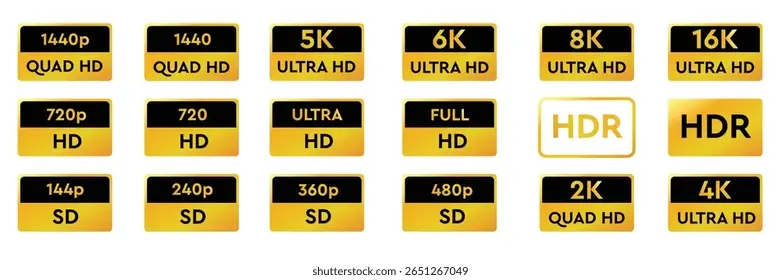
- Ultra HD (4K)
- 1440p
- Full HD (1080p)
- HD (720p)
- SD (480p)
- Low Resolution (360p and less)
Each of these versions is encoded with codecs like AV1, HEVC (H.265), and VP9 to ensure best-in-class compression.
This means Netflix is never converting 4K into 1080p in real time. All these versions already exist on the server, ready to be delivered.
2. Netflix Slices the Video Into Tiny Pieces
Instead of streaming a video as one long file, Netflix cuts it into thousands of 2-4 second segments. For every segment, multiple quality options exist:
- segment_101_4K.m4s
- segment_101_1080p.m4s
- segment_101_720p.m4s
And so on.
Your device chooses which segment to download every few seconds. This is what gives Netflix the flexibility to switch quality instantly, without interrupting playback.
3. Netflix Monitors Your Network Every Second
While you watch, Netflix is quietly studying your network conditions:
- How fast is your current bandwidth?
- How long did the last segment take to download?
- Is there jitter or packet loss?
- How full is your playback buffer right now?
- Is your device’s processor handling decoding smoothly?
This continuous monitoring forms the basis of Netflix’s adaptive logic.
4. Adaptive Bitrate Streaming (ABR): The Brain Behind the Operation
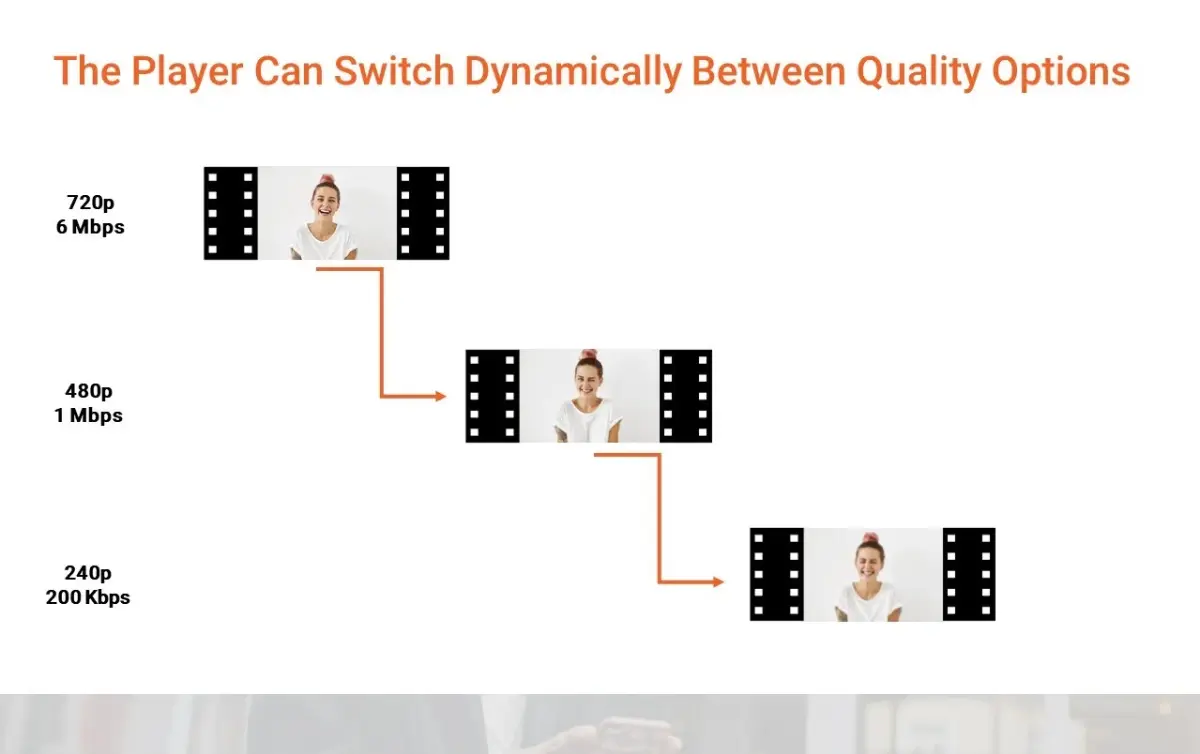
The moment Netflix predicts that your current quality level may not download fast enough for the next segment, it switches within milliseconds to a lower resolution for the next chunk.
No pauses. No buffering. No disruptions.
For example:
If your connection drops from 20 Mbps to 6 Mbps, Netflix instantly shifts from 4K to 1080p or 720p for upcoming segments, ensuring smooth playback.
Once your internet stabilizes, the algorithm climbs back up to higher resolutions just as seamlessly.
5. The Buffer Works as Your Safety Shield
Netflix maintains a buffer usually 5-15 seconds of video already downloaded but not yet played.
This buffer is the hero behind the scenes.
Even if your internet suddenly slows:
- Netflix continues playing from the buffer
- Meanwhile, it fetches lighter segments (lower resolution) to refill the buffer quickly
For the viewer, playback never stops. The transition happens invisibly.
6. Netflix’s Global CDN: The Secret Weapon
Netflix doesn’t stream from a central cloud. It operates one of the world’s largest specialized CDNs called Netflix Open Connect.
Most ISPs host Netflix servers directly inside their network. This reduces:
- latency
- congestion
- long-distance data travel
- bandwidth spikes
As a result, your device gets a stable, high-speed stream even during peak hours. A stable stream makes ABR decisions smoother and prevents lag.

7. Smarter Codecs = Better Quality at Lower Data
Netflix invests heavily in codec research. Modern codecs like AV1 and HEVC can deliver high visual quality at lower bitrates, meaning:
- A 1080p stream at 3-4 Mbps looks as good as a 1080p stream at 6-8 Mbps a few years ago.
- A 4K stream is now possible on connections where it previously wasn’t.
Better compression = fewer drops in quality.
Bringing It All Together
Netflix’s seamless quality-switching experience is the result of seven engineering pillars:
- Multiple pre-encoded versions of every scene
- Short 2-4 second video segments
- Continuous real-time measurement of your network
- Adaptive Bitrate Streaming (ABR) algorithms making millisecond decisions
- Intelligent buffering to absorb fluctuations
- A massive global CDN delivering content close to you
- High-efficiency modern codecs
Together, they create a streaming experience that feels fluid, responsive, and invisible even when your actual internet connection is not.
This is why Netflix rarely buffers, why quality shifts happen softly, and why Netflix remains one of the benchmarks for online video streaming technology.
Discussion
Start the conversation
No comments yet
Be the first to share your thoughts on this article. Your insights could spark an interesting discussion!